
Upper Lip Melasma Causes and Fixes
A clinic may promise a quick fix for upper lip melasma. This article reads the triggers a clinic names and the fixes it promises against what the AAD publishes, for a Ponte Vedra reader.
"Clear it for good" read as a clause
"We will clear it for good." A sentence like that is a promise, not a term. Look in the agreement for what the clinic commits to and what it leaves open.
The triggers on paper
The AAD writes: "Sunlight, taking birth control pills, and even stress can trigger melasma." It adds that "a trigger, such as pregnancy or a medication, causes melasma." Between them, the AAD names sunlight, pills, stress, pregnancy and medication.
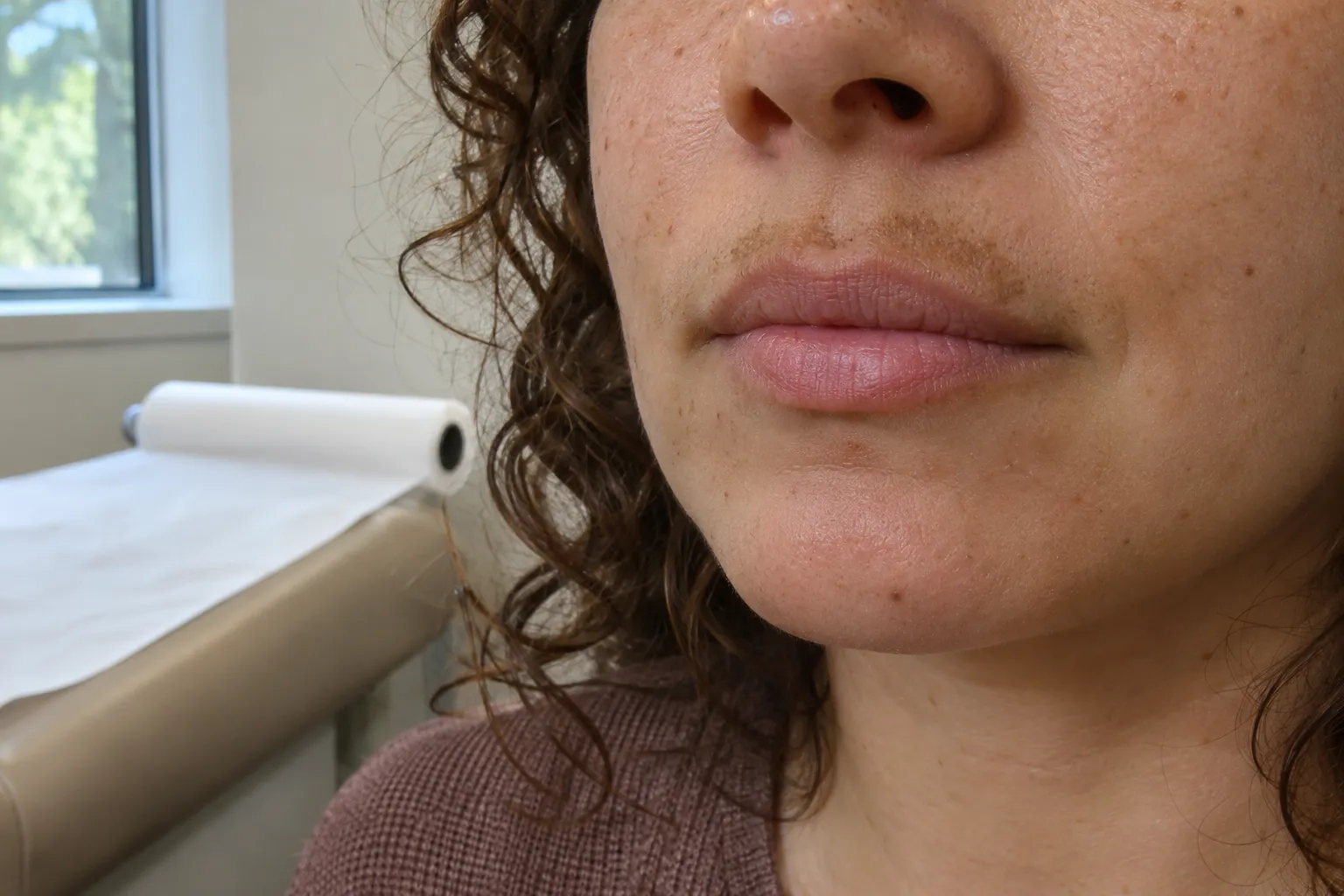
A clinic's plan should say whether triggers are part of it. Check whether the form asks you about any of them. A published review of post-inflammatory hyperpigmentation in skin of color is one more reference for pigment questions.
Reading the fixes line by line
- What is offered. Each fix should have its own line.
- What is excluded. A clause that says "results vary" should say what they vary by.
- What is separate. Treatment of pigment is one item, and anything else is another.
Lip items that arrive on the same quote
A clinic may price lip work in the same visit as pigment care. Cleveland Clinic has a page on lip augmentation by surgery, fat transfer and fillers. Pigment and volume are different questions, so each should be itemized on its own.
Naming each product
A quote that lists a product by brand should give its name and its purpose. Cleveland Clinic also has a page on what Sculptra is, where it is injected and its risks. UCLA Health's cosmetic dermatology procedures page shows how a large department names what it offers.
Ask which triggers the plan covers
Ask the clinic to write down which triggers it considers part of your plan. Then ask what the agreement says if the pigment returns.